What Are Fire Prevention Strategies?
Fire prevention strategies are hands-on methods that companies put in place to lower the chance of fires breaking out. This policy covers all aspects of fire prevention, such as installation and maintenance of fire prevention equipment; hazard assessments and susceptibility awareness, and training employees’ awareness of potential fire hazards.
Fire Protection Strategies for Commercial Buildings are more than just knowing what to do in case of a fire or emergency; they comprise not only preventing a fire from occurring (that is, cognitively recognizing variables that can cause fires), but also planning for emergencies and maintaining safety.
Why Fire Prevention Strategies Matter in Every Workplace?
Fires at work cause horrible consequences; people are hurt or killed, properties get burned/not repaired, and legal consequences may arise. The Occupational Safety and Health Administration (OSHA) in the USA has strict regulations in place to try to mitigate the chances of these incidents occurring.
With excellent Fire prevention strategies, businesses can:
- Keep employees and customers safe
- Prevent expensive damage and work stoppages
- Follow OSHA and local fire safety rules
- Lower insurance costs
- Build a safety-first mindset
Even little Safety practices, and in the case of this manual, the Monthly Fire Extinguisher Inspection, can yield significant repercussions should fire break out.

Top Fire Prevention Strategies for Safer Workspaces
To create a safe workplace, you need to plan, train, and maintain things. Here are the best fire prevention strategies that all US businesses should put into action:
- Create and inspect smoke detectors and fire alarms:
- Ensure to locate alarms in strategic areas, nd tests are carried out frequently.
- Schedule Monthly Fire Extinguisher Inspections:
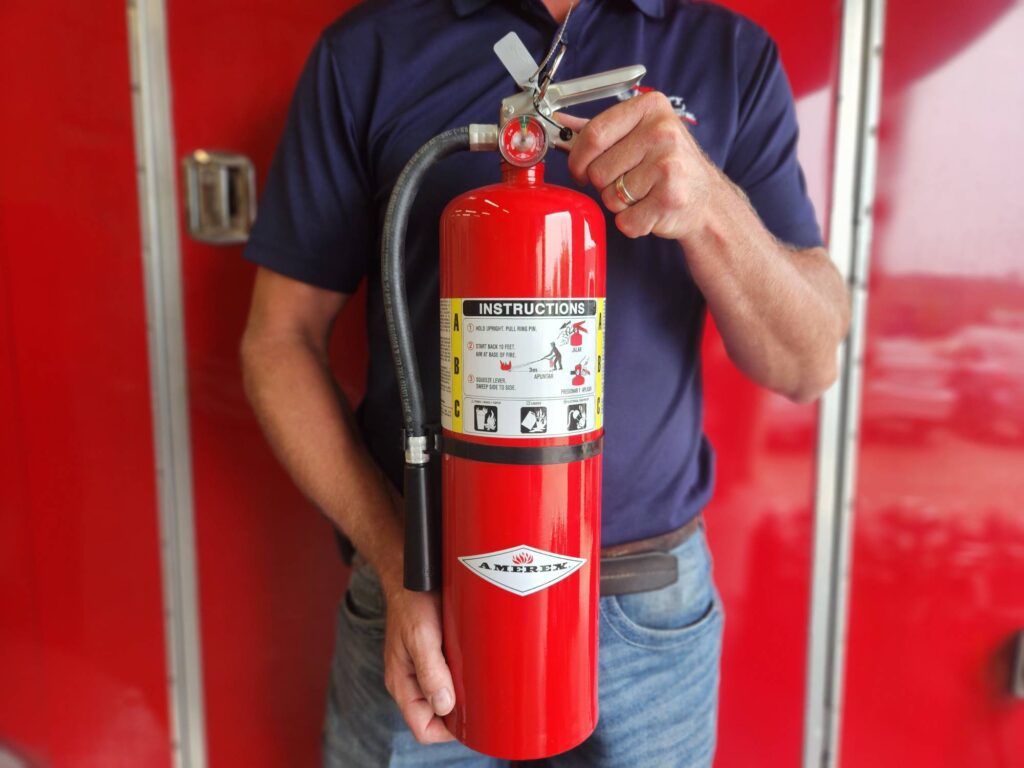
- A Monthly Fire Extinguisher Inspection has an impact on ensuring that all extinguishers work, have pressure, and people can reach them. This required and straightforward step prevents equipment from failing when emergencies happen.
- Maintain Clean and Dust-Free Workplaces:
- Paper and other dust and materials that can burn up are capable of accumulating, igniting, and so spreading fire.
- Store Flammable Materials:
- Fire prevention is about using the right containers to store combustible liquids and chemicals; ensuring alarms are NOT located next to sources of ignition, ie, electrical panels, heaters, etc.
- Electrical Safety Practices:
- Don’t plug too many things into power strips or use wires that are broken. Get your electrical systems checked to spot any risks.
- Set Up Smoking Spots:
- In the case of your work being a smoking one, designate an area outside the building with good receptacles to dispose of cigarettes and other smoking materials so that you reduce points of ignition.
- Keeping Emergency Exits Clear:
- Make sure nothing blocks fire exits. All escape routes should have bright signs and stay clear at all times.
Fire Safety Equipment Every Workplace Should Have
To back up good fire safety plans, workplaces need:
- Fire extinguishers:
- Put every 75 feet, and check during Monthly Fire Extinguisher Inspections.
- Smoke detectors and fire alarms:
- Set up and checked often.
- Sprinkler systems or fire suppression systems:
- Key for factories and kitchens.
- Fire blankets:
- A useful piece of equipment to have in laboratories or kitchen areas.
- Emergency lighting:
- During power outages or excessively smoky situations, show employees the exit.
- Evacuation maps:
- Hung on every level or easily visible on the door when rooms have been evacuated, so people can find their way to an exit.
- Hung on every level or easily visible on the door when rooms have been evacuated, so people can find their way to an exit.
Fire Safety Tips emphasize that maintaining and regularly checking on any of this type of equipment is as critical to your environment as implementing it; therefore, maintaining a strict and regular inspection routine for fire extinguishers must be adhered to.
Fire Prevention Training for Employees
Teaching plays a key role in fire safety. When workers know what to do—and what to avoid—they become the first defense against fire risks.
Good training should cover:
- Spotting common fire dangers
- Correct use of fire extinguishers (including when not to use them)
- Exit plans and meeting spots
- How to report fires
- Taking part in fire drills
Reinforcing this kind of training for new employees and at least once per year is important as well. Not to mention a visual trigger in terms of posters, signs, and checklists to keep people thinking about fire safety on a day-to-day basis.
Common Fire Hazards to Look Out For
Even in the safest of workplaces, hazards must be identified, or there are risks associated. Keep an eye out for:
- Overloaded electrical outlets
- Unattended appliances or heating equipment
- stored flammable materials
- Blocked emergency exits
- Ignored trash buildup
- Poor upkeep of fire safety equipment
- Failure to Check Fire Extinguishers Monthly
Fire Hazards in Commercial Buildings can often be identified early—regular checks can spot these hazards, stopping dangerous situations before they start.
Checklist: Fire Prevention Strategies You Can Put into Action Today
I’ve put together a few things you can do to start forming a safe environment:
- Schedule your Monthly Fire Extinguisher Inspection
- Test smoke alarms
- Clean workspaces that can become messy
- Flammable goods should be in sanctioned storage containers in stores
- Look at electrical appliances and cords
- Post newly developed fire evacuation maps
- Complete a fire drill this quarter
- As a team, train an employee to be a fire warden
- Clearly labeled and clear exits for emergencies
- You can develop and implement Fire prevention strategies.
By continuing monthly activities from this list, you can maintain safety standards and help eliminate fire incidents.
FAQ
Q1. How often do you check fire extinguishers?
Fire extinguishers require a Monthly Fire Extinguisher Inspection to check: charge, condition, and accessibility.
Q2. What kicks off the creation of fire prevention strategies?
A fire risk assessment starts the process. It spots dangers, looks at current safety measures, and points out areas to improve.
Q3. Does the USA require fire prevention strategies?
Every company must have fire safety equipment, fire safety policies, and proper procedures for dealing with fire. One can be charged fines or legal orders if the guidelines are not followed correctly.
Q4. Can fire extinguishers be used by an employee?
Employees with proper training are allowed only to use fire extinguishers. If more help is needed, one should contact to experts.
Q5. What should employees include in their training on fire safety?
Employee fire training must discuss the threats that the employees may face in case of fire, the building evacuation, fire extinguisher usage, the location they should go to, and remind each employee what they will do during the emergency.
Conclusion
Avoiding fires that have not occurred is more effective as well as necessary as compared to cleaning up after fires. By implementing intelligent Fire prevention strategies and making sure to do things like Check Fire Extinguishers Every Month, work sites throughout the USA, and not just the northeast, can greatly reduce the chances of having fires occur.
An example of fire prevention would be: regardless of whether you have a tiny office or a massive factory to manage, fire prevention is money well spent. It protects your team, protects your building, and gives you peace of mind at bedtime. Get going on these plans now, and build a process where safety is the number one priority.
Also Read:
Essential Fire Emergency Procedures for Every Workplace